October 29, 2026 Reading Time: < 1 minute
Reading Time: < 1 min read
Akithma Dias
Research Intern at the Lakshman Kadirgamar Institute of International Relations and Strategic Studies (LKI) .
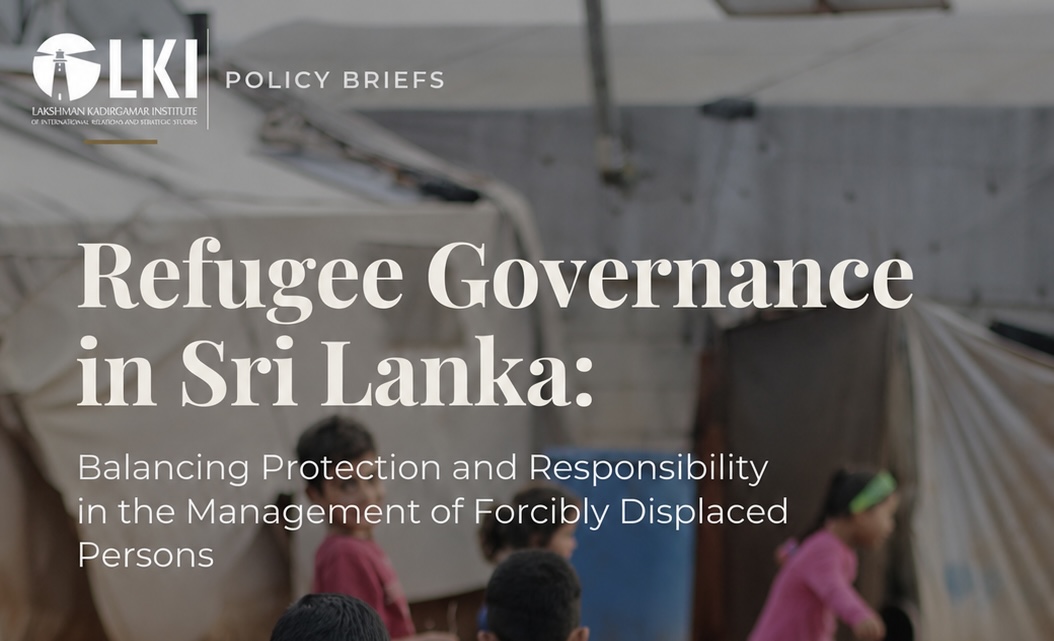
Abstract:As a non-signatory to the 1951 UN Refugee Convention and its 1967 Protocol, Sri Lanka currently employs an ad-hoc approach in its management of refugees and asylum seekers. While this approach allows Sri Lankato respond to arrivals on a case-by-case basis, the extent to which it adequately fulfills the human rights and humanitarian law obligations that Sri Lanka is bound by under international law is debatable. Moreover, the absence of a domestic comprehensive governance system for identifying and registering ‘irregular’ arrivals may complicate the distinction between refugees and asylum seekers, and victims of human trafficking or smuggled migrants, a distortion which poses a risk to Sri Lanka’s national security. This study questions whether Sri Lanka, as a non-signatory to international refugee frameworks, should establish a Forcibly Displaced People (FDP) governance system to effectively balance its human rights and humanitarian law obligations with its capacity to safeguard national security.
This concern is particularly relevant given the importance of Sri Lanka upholding its international legal obligations to preserve its standing within the international community, in a context where the intersection between FDP governance, human rights and humanitarian law obligations and national security has been relatively unexplored within Sri Lanka. The research employs a qualitative methodology adopting a desk-based analysis of primary sources including international treaties and domestic legislation complemented by academic literature and news articles to assess the viability of Sri Lanka’s current ad-hoc approach and evaluate the implications of adopting a domestic FDP governance framework. It argues that a comprehensive FDP governance framework is crucial for Sri Lanka, particularly in ensuring that it can effectively fulfil the international law commitments it has acceded to whilst balancing domestic concerns surrounding national security.
24 Horton Place
Colombo 7
Sri Lanka
A think tank engaging in independent research of Sri Lanka’s international relations and strategic interests, to provide insights and recommendations that advance justice, peace, prosperity, and sustainability.