August 7, 2026 Reading Time: 2 minutes
Reading Time: 2 min read
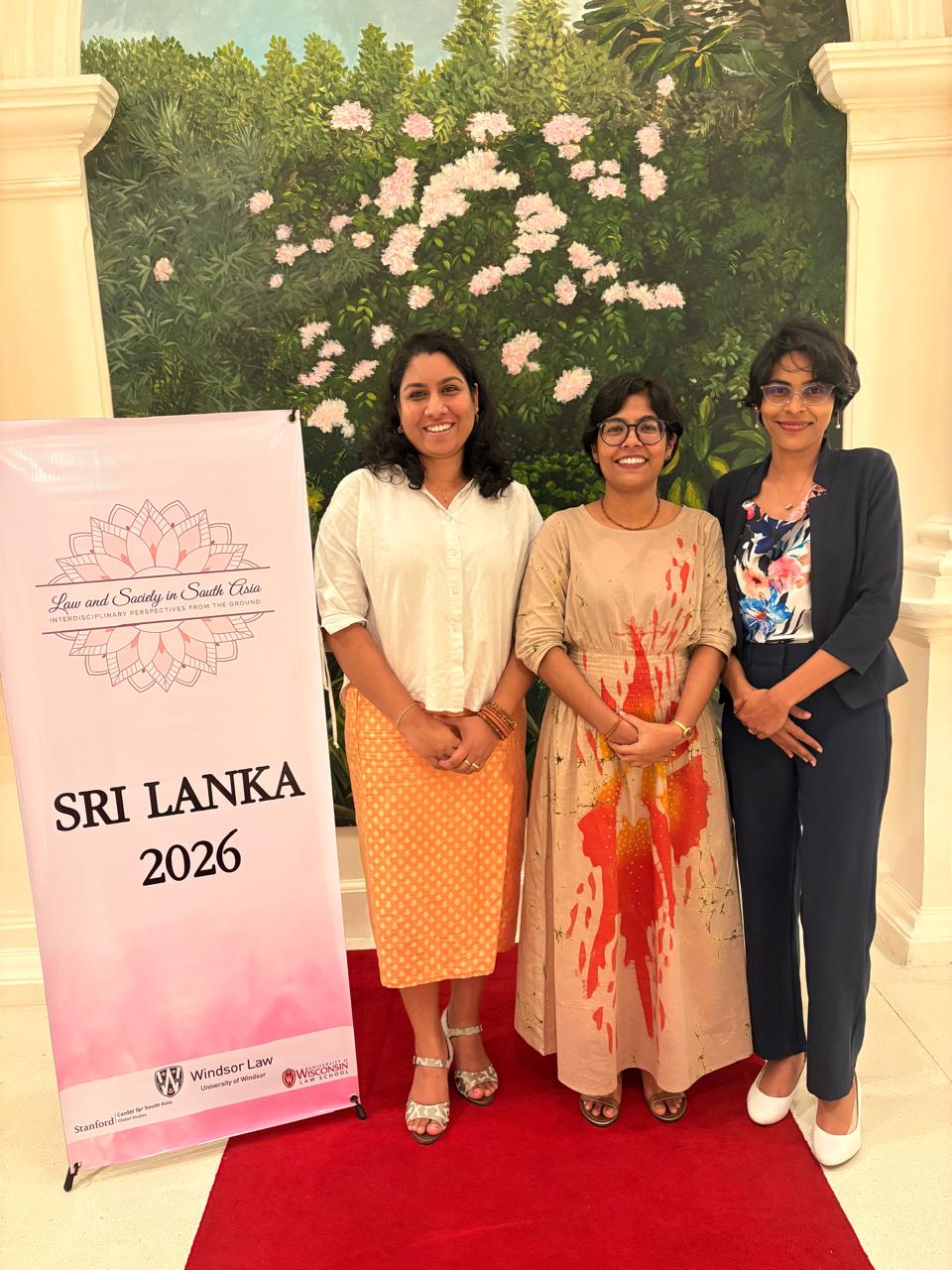
Senior Research Fellows Ms. Piyumani Ranasinghe, Ms. Madhuka Rukmalgama, and Ms. Nillasi Liyanage of the Lakshman Kadirgamar Institute of International Relations and Strategic Studies (LKIIRSS), attended the two-day research conference “Law and Society in South Asia: Interdisciplinary Perspectives from the Ground,” held at Colombo, on the 28th and 29th of July 2026. The conference was organized by the Rodzik Law and Entrepreneurship Chair, Faculty of Law University of Windsor, in collaboration with the Centre for South Asia at Stanford University and the Global Legal Studies Centre at the University of Wisconsin Law School.
The gathering included scholars, policymakers, graduate students, and community-based researchers to foster discourse on how legal systems influence and respond to lived political, cultural, economic, and social experiences.
Notably, the distinguished keynote speech of the conference on “International Law and Society: The Vision of C.G. Weeramantry” was delivered by Prof. Anthony Anghie, Professor of Law at the S.J. Quinney School of Law at the University of Utah and a member of the Scholar network of the Third World Approaches to International Law (TWAIL).
Ms. Liyanage presented a doctrinal critique of the Arms Trade Treaty from a South Asian perspective, examining the proliferation of illicit small arms in Sri Lanka within broader regional and international arms-control frameworks. The presentation highlighted the implications of illicit arms flows for human security, transnational security and regional stability, while considering the challenges facing international regulatory frameworks in responding to the particular security realities of South Asia.
Ms. Ranasinghe presented a Feminist Critical Discourse Analysis of the Sri Lankan Supreme Court’s Determination on the Gender Equality Bill, examining the judicial narratives and assumptions that shaped the Court’s engagement with gender equality. The presentation situated these domestic legal debates within broader questions of international human rights obligations, global gender-equality norms, and the relationship between domestic legal frameworks and Sri Lanka’s international commitments.
Ms. Rukmalgama examined the political ecology of infrastructure-led development in South Asia, with particular attention to Sri Lanka and the intersection between development, environmental security and transnational dynamics. The presentation situated domestic infrastructure and environmental challenges within wider regional processes, highlighting how development choices increasingly intersect with questions of environmental governance, security and cross-border strategic interests.
The conference provided an important platform for LKIIRSS researchers to contribute to interdisciplinary discussions on contemporary legal and policy challenges in South Asia, while engaging with international scholars on issues at the intersection of law, governance, security, development and human rights. The participation of LKIIRSS Senior Research Fellows also contributed to strengthening the Institute’s academic and research networks and bringing Sri Lankan perspectives into wider regional and international scholarly debates.

24 Horton Place
Colombo 7
Sri Lanka
A think tank engaging in independent research of Sri Lanka’s international relations and strategic interests, to provide insights and recommendations that advance justice, peace, prosperity, and sustainability.